The Global Executive Toolkit: Professionalize Your Western Presence

Categories: International Trade
Wishlist Share
Share Course
Page Link
Share On Social Media

About Course


The Global Executive Toolkit: Professionalize Your Western Presence
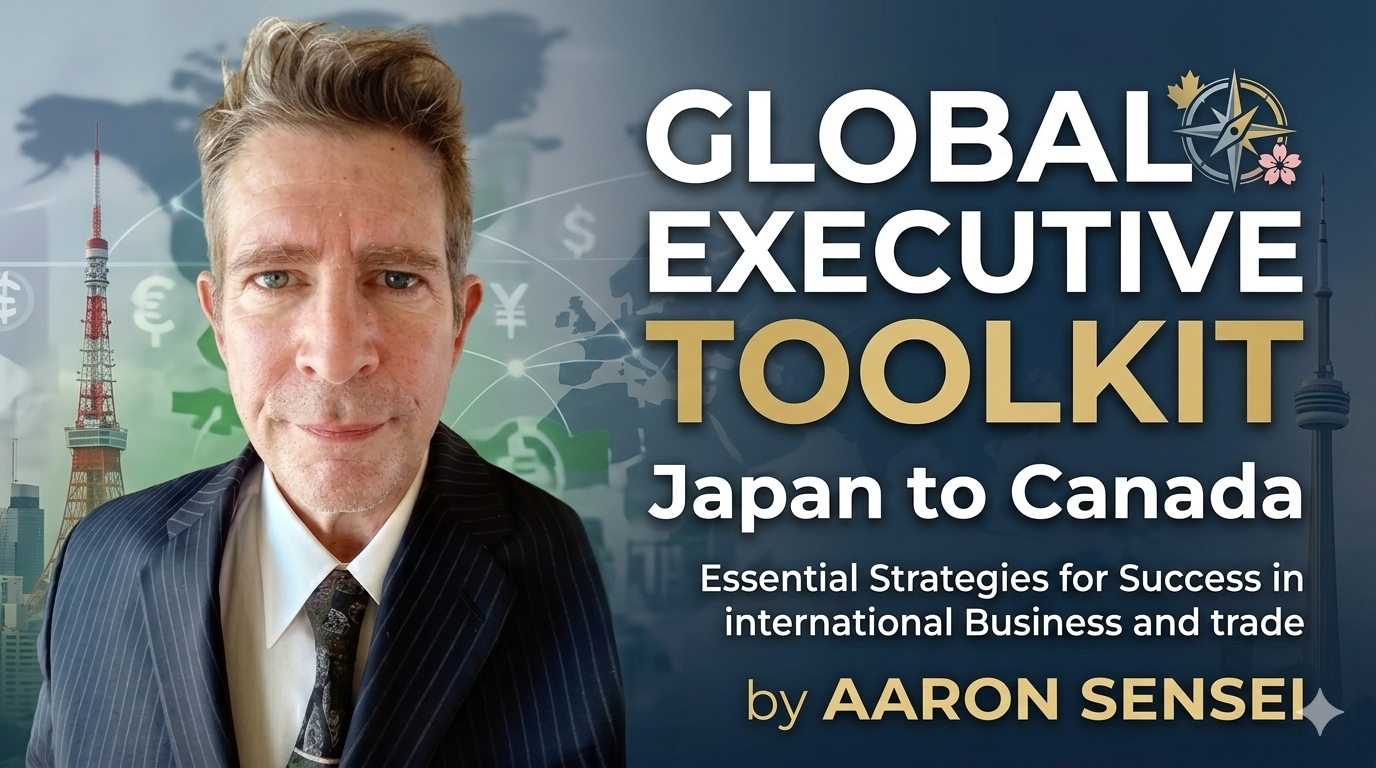
The Strategic Blueprint for the Japan-Canada Trade Corridor.

Stop losing opportunities to “Textbook English” and regulatory friction. Many Japanese SMEs have world-class products but struggle with “Third-Class” international communication and complex border compliance. This is not a language course—it is a Business Modernization Toolkit designed to get your brand, your goods, and your capital into North America.

What You Will Master:

  • The Digital Handshake: A LinkedIn and “About Us” rewrite that builds instant authority with Canadian and US executives.

  • Frictionless Finance (Wise/Venn/PayPal): Move beyond ¥5,000 wire transfers. Set up a modern fintech stack to manage CAD/USD liquidity and provide the “PayPal Trust Factor” for Western buyers.

  • The Japan Liquidity Loop (Sony/SBI Shinsei): How to move your global earnings back to Japan with 0% incoming fees using the most English-friendly digital banks.

  • Accounting & Compliance Foundations: When you need a CPA vs. when to use QuickBooks/Xero. Includes the “Must-Know” thresholds for GST/HST registration ($30k CAD).

  • The CBSA Logistics Roadmap: Navigate the Canadian border with confidence. Learn about HS Codes, duty thresholds, and how to avoid costly “Non-Compliance” delays at the Port of Vancouver.

  • The North American Sales Stack: Strategic scaling on Shopify, Amazon.ca (FBA), and Etsy to reach the Canadian consumer directly.

  • The Precision Pitch: Master the “30-Second Elevator Pitch” and the specific “Logistics English” used in international supply chains.


Course Specifications (For the “Additional Data” Tab):

  • Target Audience: Japanese SME Owners, Export Managers, and Fintech Founders.

  • Total Duration: 1 Hour 45 Minutes of high-impact strategic content.

  • Included Resources: The HS Code Cheat Sheet, Western Bio Templates, and the “NRI” (Non-Resident Importer) Checklist.

  • Certificate: Earn the Global Business Communication & Trade Specialist seal upon completion.


Show More

What Will You Learn?

  • Local Banking Setup: How to establish a local Canadian bank account (Transit/Institution numbers) from Japan using Wise and Venn to eliminate high international wire fees.
  • Duty-Free Logistics: Strategies to leverage the CPTPP Trade Agreement for 0% import duties on "Made in Japan" products.
  • The NRI Model: Master the Non-Resident Importer (NRI) framework to ship goods directly to Amazon.ca warehouses (YVR4) without a Canadian physical office.
  • Legal Shielding: The step-by-step process for incorporating a British Columbia ULC, allowing for 100% Japanese-resident directors and tax efficiency.
  • North American Negotiation: How to adapt your pitch from Japanese "Aisatsu" style to the direct, ROI-focused "Billion Dollar" pitch preferred in Canada and the USA.

Course Content

Topic 6: Amazon.ca & FBA Logistics> How to ship from Chiba to a Richmond, BC warehouse efficiently.
Lesson 6.1: Shipping from Chiba to Richmond (YVR4) EfficientlyTo sell on Amazon.ca, your goods must reach an Amazon Fulfillment Center (FC). For Japanese exporters, the YVR4 warehouse in Delta (near Richmond, BC) is the primary gateway because of its proximity to the Port of Vancouver and the airport.1. The Golden Rule: DDP (Delivered Duty Paid)Amazon will REFUSE any shipment that arrives with "Collect" charges.The Requirement: You must ship under DDP terms. This means you (the seller) pay all shipping, duties, and taxes before the box reaches Amazon’s door.The Carrier: Use DHL, FedEx, or UPS. These carriers have "In-House" customs brokers who will bill the Canadian GST and duties back to your Japanese account.2. The NRI (Non-Resident Importer) SetupYou do not need a Canadian office, but you must act as the Importer of Record.Business Number (BN): You must register for a 15-digit Canadian Business Number (e.g., 123456789 RM 0001) through the Canada Revenue Agency (CRA).Why it matters: Without this, your shipment will be stuck at customs in Vancouver, and Amazon will not be able to "claim" the inventory because they refuse to be the importer.3. The "YVR4" Logistics Path (Chiba → BC)Step A: Prep & Labeling (The FNSKU): Every unit must have an Amazon-specific barcode. If you don't do this in Chiba, Amazon will charge you a "Prep Fee" (approx. $1.00+ per unit) or reject the stock.Step B: The Shipping Plan: In your Amazon Seller Central, you must create a "Shipping Plan." Amazon will likely assign you to YVR4 (Delta, BC) or YXX2 (Richmond, BC) because you are shipping from the Pacific.Step C: Box Limits: Ensure no box exceeds 22.5kg (50 lbs) or 63.5cm on any side. If it's over, you need a "Team Lift" sticker, or it will be rejected.4. Cost Efficiency: Small Parcel vs. LTLShipping MethodBest ForTypical TimeAir Courier (DHL/FedEx)1-5 boxes (High value/Low weight)3–5 DaysOcean Freight (LCL)1-5 Pallets (Heavy/Bulk)20–30 DaysAmazon Global LogisticsDirect integration (Cheapest rates)VariableLesson Action Item:Register for a BN: Apply for your Canadian Business Number (RM account) today.Verify Prep: Print a sample FNSKU label and ensure it's scannable.Quote DDP: Contact your local DHL or FedEx representative in Chiba and ask for "DDP (Duty Drawback/Billing) rates to Canada."Instructor Note:Shipping is the highest cost in your "North American Stack." By mastering the NRI and DDP process, you avoid the "Hidden Fees" of storage and rejected shipments that bankrupt most first-time exporters. We have now covered the logic for Topics 1-6. Would you like to finish with the "Topic 7: The Billion Dollar Pitch" to teach them how to negotiate with their new Canadian partners?

  • Global Trade & Strategy Mastery Exam

Student Ratings & Reviews

No Review Yet
No Review Yet